How effectively are young people supported on the labour market? Project “Youth Employment PartnerSHIP” aimed to answer this question by evaluating employment initiatives targeting youth in Spain, Hungary, Italy and Poland.
The European Youth Guarantee (EYG) was introduced in 2013 to combat youth unemployment. Five years in, policies resulting from EYG still lacked comprehensive evaluations in a cross-country framework. The countries participating in the project shared common challenges of high youth unemployment and low capacity to perform high quality impact studies of youth employment Initiatives.
The project evaluated two set of initiatives:
- outreach activities of Public Employment Services (PES) and
- job trials/job subsidies to different job contracts offered to youth, with a particular attention paid to gender dimension of policy targeting and outcomes.
We used harmonized methods of evaluation based on similar administrative data, which are little explored in CEE and SE Europe. These evaluation studies were complemented with RCT (Randomized Control Trials) experiments in Hungary, Poland and Spain. They assessed which interventions could boost outreach to inactive, unregistered youth.
In addition, the project built capacity in research institutions to implement evaluation studies of employment initiatives by creating a transnational research network on youth employment policies, internships for PhD students, and workshops on evaluation methods for researchers from other institutions. It also promoted the use of impact studies among policy-makers. As a result, youth employment policies can generally become more effective.
All publications prepared as a part of the project are available on the project’s website.
***
The „Youth employment partnerSHIP – evaluation studies in Spain, Hungary, Italy and Poland” project benefits from 1,8 million € grant from Iceland, Liechtenstein and Norway through the EEA and Norway Grants Fund for Youth Employment. The Fund supports international project initiatives that promote sustainable and quality youth employment in Europe.
The project is implemented by:
Lead partner – Institute for Structural Research (IBS) (Warsaw, Poland)
Budapest Institute for Policy Analysis (Hungary)
Collegio Carlo Alberto (Italy)
Foundation for Applied Economics Studies – FEDEA (Spain)
National Institute for the Analysis of Public Policies – INAPP (Italy)
University of the Basque Country (Spain)
Expertise partners
NHH Norwegian School of Economics (Norway)
Paris School of Economics (France)
The EEA and Norway Grants
The EEA and Norway Grants represent the contribution of Iceland, Liechtenstein and Norway towards a green, competitive and inclusive Europe.
There are two overall objectives: reduction of economic and social disparities in Europe, and to strengthen bilateral relations between the donor countries and 15 EU countries in Central and Southern Europe and the Baltics. The three donor countries cooperate closely with the EU through the Agreement on the European Economic Area (EEA). The donors have provided €3.3 billion through consecutive grant schemes between 1994 and 2014.
For the period 2014-2021, the EEA and Norway Grants amount to €2.8 billion. The priorities for this period are:
- Innovation, Research, Education and Competitiveness
- Social Inclusion, Youth Employment and Poverty Reduction
- Environment, Energy, Climate Change and Low Carbon Economy
- Culture, Civil Society, Good Governance and Fundamental Rights
- Justice and Home Affairs
Eligibility for the Grants mirror the criteria set for the EU Cohesion Fund aimed at member countries where
the Gross National Income (GNI) per inhabitant is less than 90% of the EU average. The EEA and Norway Grants scheme consists of two financial mechanisms. The EEA Grants are jointly financed by Iceland, Liechtenstein and Norway, whose contributions are based on their GDP. Norway Grants are financed solely by Norway.
contact: ibs@ibs.org.pl
media: media@ibs.org.pl
Project lead: Institute for Structural Research
Irysowa 18c, 02-660 Warsaw, Poland
- IBS - principal investigator:
- Iga Magda
- IBS - researchers:
- Marta Palczyńska, Jan Gromadzki, Mateusz Smoter
- Contact:
-
yepartnership@ibs.org.pl
news

On 28–30 October 2025, Warsaw hosted a seminar entitled ‘Empowering Insights: Enhancing Education, Employment and Youth Guarantee Monitoring’.
The Conference took place in Prague on 21-23 September 2023. Piotr Lewandowski and Marta Palczyńska represented IBS.
The conference took place in Warsaw on 11-12 September 2023. Marta Palczyńska represented IBS.
This year the ESPE conference was held in Belgrade in June. Marta Palczyńska from IBS presented the paper "The employment effects of a wage subsidy for the young during an economic recovery", co-authored by Astrid Kunze (NHH) and Iga Magda (IBS).

SEHO - the Society of Economics of the Household brings together scientists from around the world dealing with the subject of broadly understood economics of the household. The University of Copenhagen organised this year's meeting.
The IZA workshop "Inequality in Post-Transition and Emerging Economies" was organised by Hartmut Lehmann, Natalia Danzer, and Alexander Muravyev. Marta Placzyńska presented IBS's research findings.

„It’s difficult but not impossible” is the slogan of the meeting where representatives of various backgrounds were wondering how to improve existing employment support programs.

Over 200 people from over 31 countries – scientists, policymakers and representatives of non-governmental organisations were discussing the most recent problems and trends related to the youth labour market.

The first photo report from the conference. Enjoy!
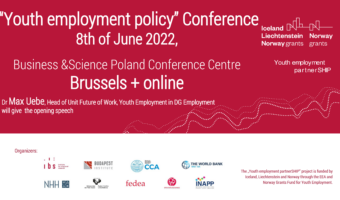
What must we do to improve youth employment support programs? – Iga Magda, vice-president of the Institute for Structural Research.

8th of June 2022 Business &Science Poland Conference Centre Rue Belliard 40, Brussels + online
Youth Employment PartnerSHIP - special session at II LABORatorio Revelli Biannual Workshop "Technological change, health inequality and data for policy evaluation"

Turin, 24th – 25th of February 2022

The dissemination workshop took place at the 1st Innovation Society Forum in Miskolc on October 21st.
The evaluation of programmes targeting young jobseekers and other incentives for increasing youth employment were also discussed at the "Labour Economics Research 2021" Hungarian conference in Szirák.
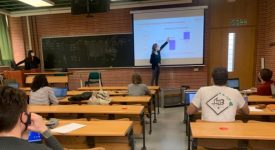
Summary of the workshop "Youth Employment Policies, SEPES and Gender Inequality" held on September 20.

Carlotta Varriale, a PhD student at Bocconi University, was on her research visit in May.

The results of the studies aiming to evaluate youth employment policies in Spain, Italy, Hungary and Poland are available now.
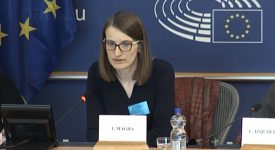
Materials from the Public Hearing of the FEMM Committee on labour and social situation of women in the EU - 27.02, European Parliament in Brussels
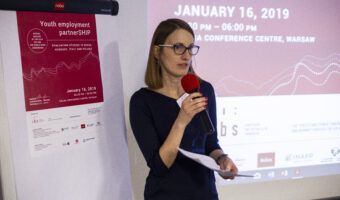
We launched our new project during a special session of the 2019 IBS and the World Bank Conference – Warsaw, January 16.
We kindly invite you to the launch event for our new international project „Youth Employment PartnerSHIP” – Warsaw, January 16.
EVENT
Summary of the workshop on the evaluation of active labour market policies available in Poland for the unemployed youth.
Publications
Despite significant improvements in recent decades, women's employment rates and wages lag behind those of men in all European countries. However, the magnitude of these gaps differs significantly across countries. Presented policy brief reviews policy measures that could reduce the gender gaps in the labour ...
We conducted a survey experiment in Poland to investigate how providing young people from the NEET group with information affected their rate of registration with the public employment services. The individuals assigned to the treatment group received information about the services offered by the PES. ...
This paper contributes to the existing literature on wage subsidies, EPL reforms and their interaction focusing on regional disparities within the same country. The interest of the exercise relies in highlighting different reactions to the same reforms of the same institutional framework, depending on local ...
One of the prime objectives of the reinforced Youth Guarantee is to engage vulnerable young persons and to encourage them to register as jobseekers. We piloted one relatively less resource-intensive method: organising workshops where local stakeholders working with vulnerable youth and local PES youth counsellors ...
In recent years the number of young individuals not in employment, education nor training has been rising alarmingly. This condition may have long-lasting social and economic consequences and the ability to profile the most resilient types gives important information on more effective interventions for the ...
This publication was created as part of the “Youth Employment PartnerSHIP” project, which seeks to combat unemployment among young people. It measures the effectiveness of instruments to support young people who aren’t working or studying in four countries: Poland, Spain, Italy and Hungary. The project ...
This paper compares the relative effectiveness of selected active labour market policies available to young unemployed people in Poland in the years 2015-2016. We use rich administrative data and propensity score matching techniques to control for the non-random selection of unemployed individuals into alternative interventions. ...
This publication was created as part of the “Youth Employment PartnerSHIP” project, which seeks to combat unemployment among young people. It measures the effectiveness of instruments to support young people who aren’t working or studying in four countries: Poland, Spain, Italy and Hungary. The project ...
2021-03-15
Policy lessons from the evaluation of youth employment policies in Spain, Hungary, Italy and Poland
This policy brief summarises the main lessons of four studies prepared in the Youth Employment PartnerSHIP project. Each study evaluated the impact on young people of one or several employment policies using counterfactual quantitative methods based on administrative data from four countries. The issue of youth unemployment is relevant in all of these countries, although…
2021-02-16
Evaluation of internship contract in Spain
The internship contract (IC) was originally designed to promote an appropriate employment transition for young people with higher education from their formative years to their working lives. Employers are supposed to invest in human capital and, in correspondence, they can benefit from lower wages and ...
2021-02-02
Counterfactual impact evaluation of hiring incentives and EPL reduction on youth employment in Italy
This study uses a counterfactual approach based on administrative registry data to evaluate the impact on youth employment of two selected demand-side public policies implemented in Italy in 2015: a rebate of social security costs (Law 190/2014, art. 1, c. 118) and a reduction in ...
This article investigates the role of personality traits and cognitive skills as potential determinants of overeducation and in explaining overeducation wage penalty. Using a representative survey of the Polish working-age population, with well-established measures of cognitive skills and personality traits, I find that accounting for ...
This publication was created as part of the “Youth Employment PartnerSHIP” project, which seeks to combat unemployment among young people. It measures the effectiveness of instruments to support young people who aren’t working or studying in four countries: Poland, Spain, Italy and Hungary. The project ...
persons from IBS