Social dimensions of the energy transition: inequalities, institutions and acceptance of change
December 3 2025
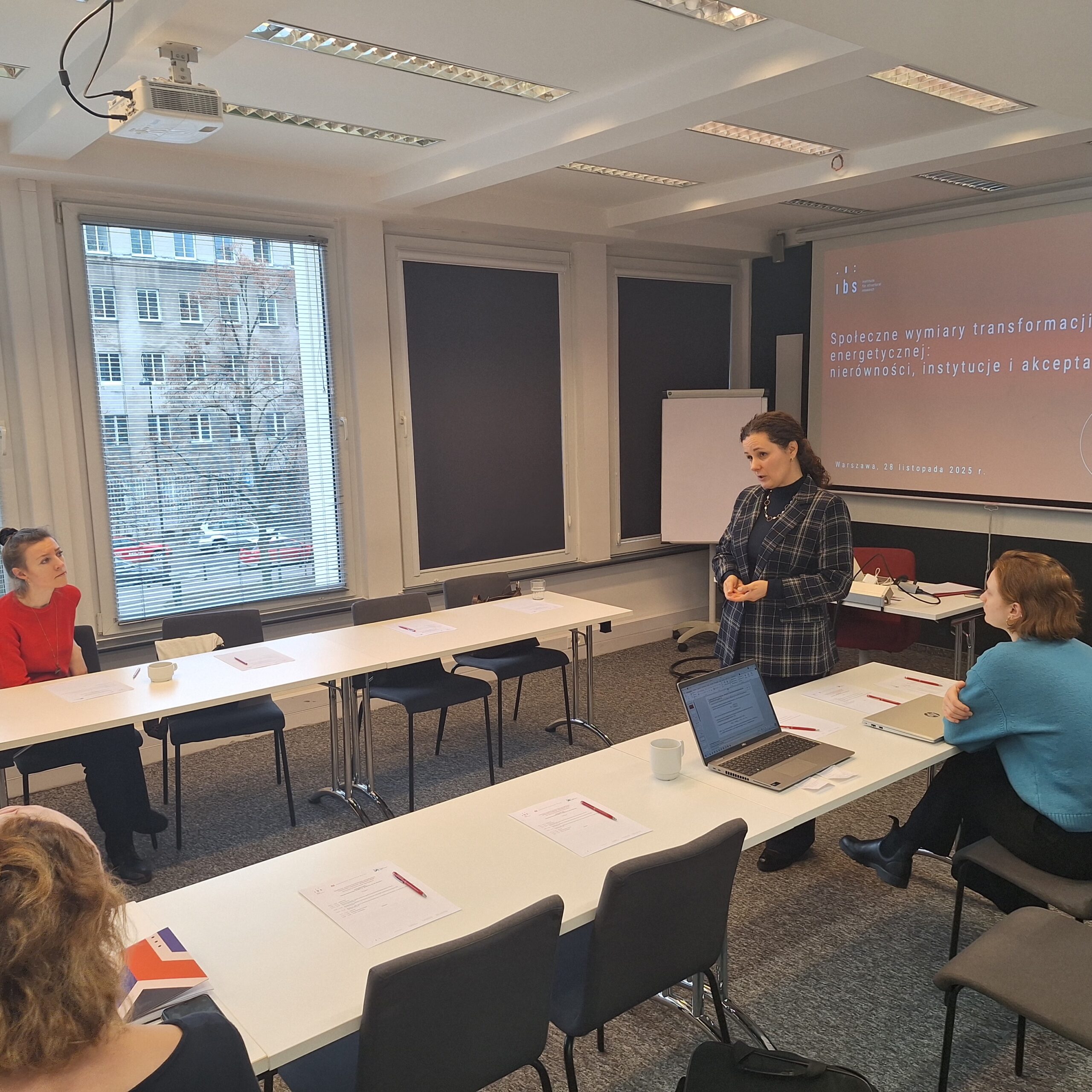
The meeting brought together representatives of central and local government, non-governmental organisations and research institutions.
During the seminar, the latest IBS research findings were presented, focusing on the analysis of social attitudes that shape engagement in the energy transition and acceptance of the changes taking place.
During the seminar, the latest IBS research findings were presented, focusing on the analysis of social attitudes that shape engagement in the energy transition and acceptance of the changes taking place.
Joanna Mazurkiewicz discussed the results of a study on social preferences regarding different variants of energy and climate policy and the distribution of costs and benefits associated with the energy transition. The presentation also outlined the factors shaping attitudes towards changes in the energy sector and the diversity of views on climate action.
Jan Frankowski presented an analysis of the impact of the “neighbourhood effect” on investment decisions related to renewable energy installations among residents of single-family houses. The study, based on data from the “Clean Air” programme, identified the strength of imitation effects and the influence of income and wealth differences on the spread of new technological solutions.
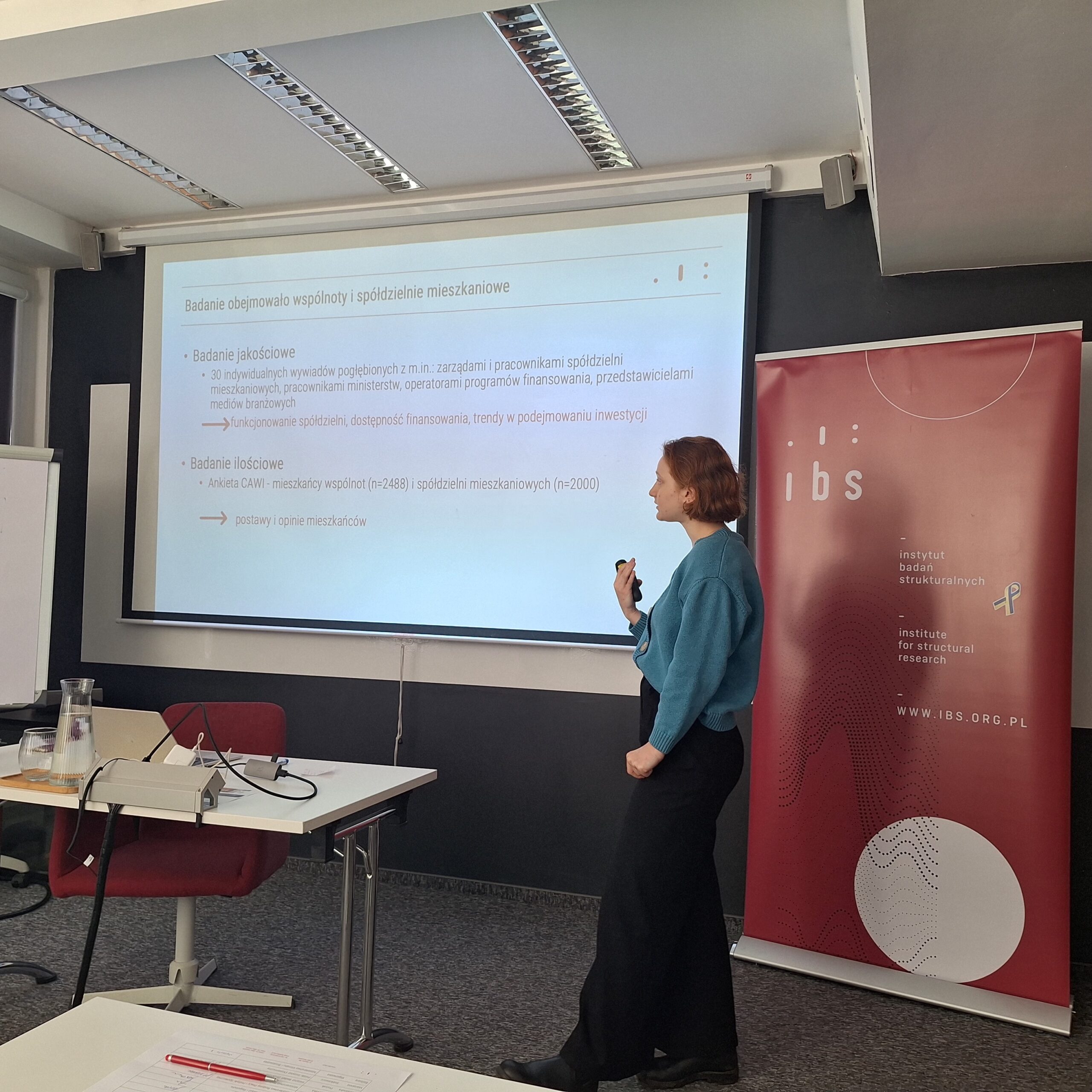
Aleksandra Prusak presented the results of research carried out in housing cooperatives and communities, which made it possible to identify barriers and factors conducive to the implementation of prosumer solutions in multi-apartment buildings.
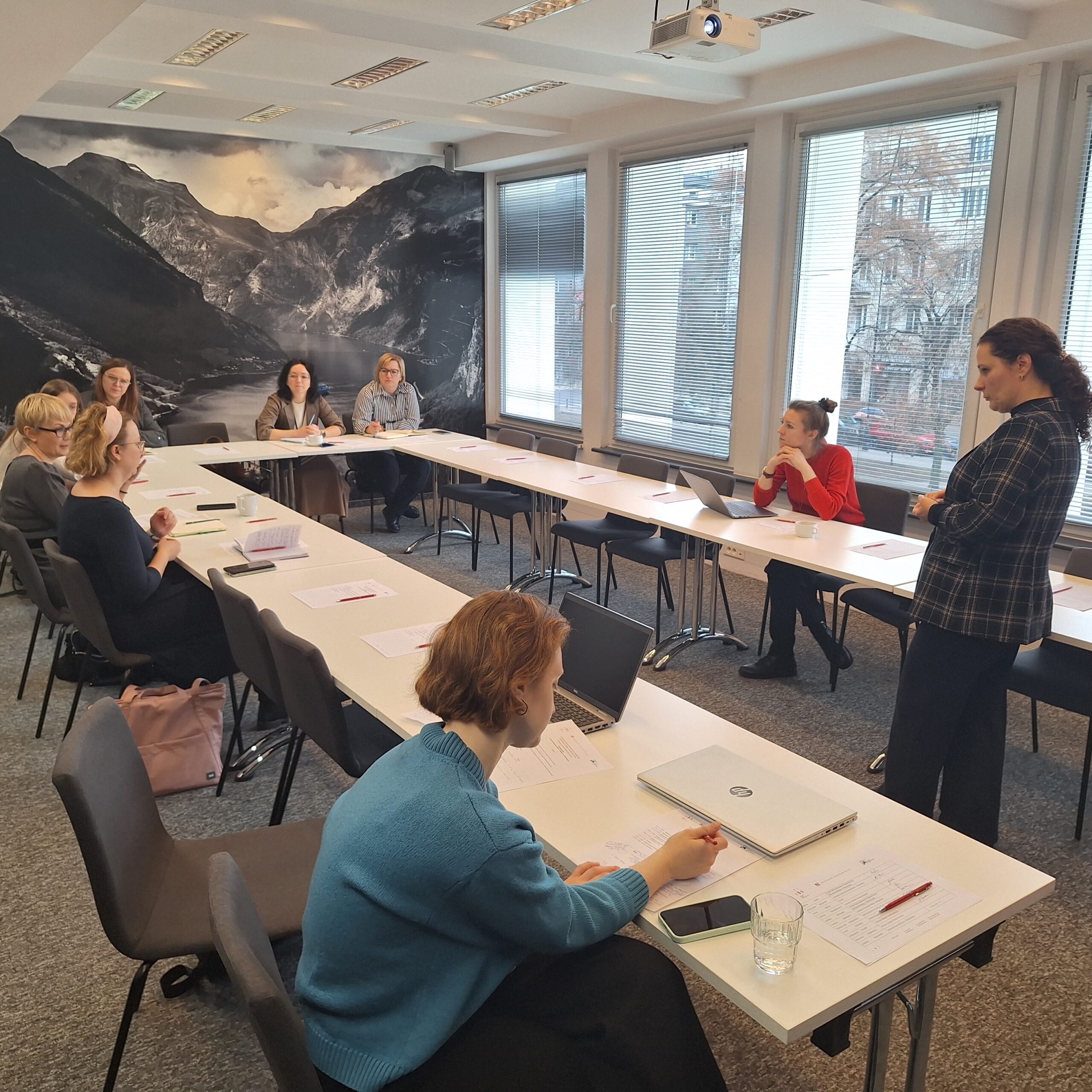
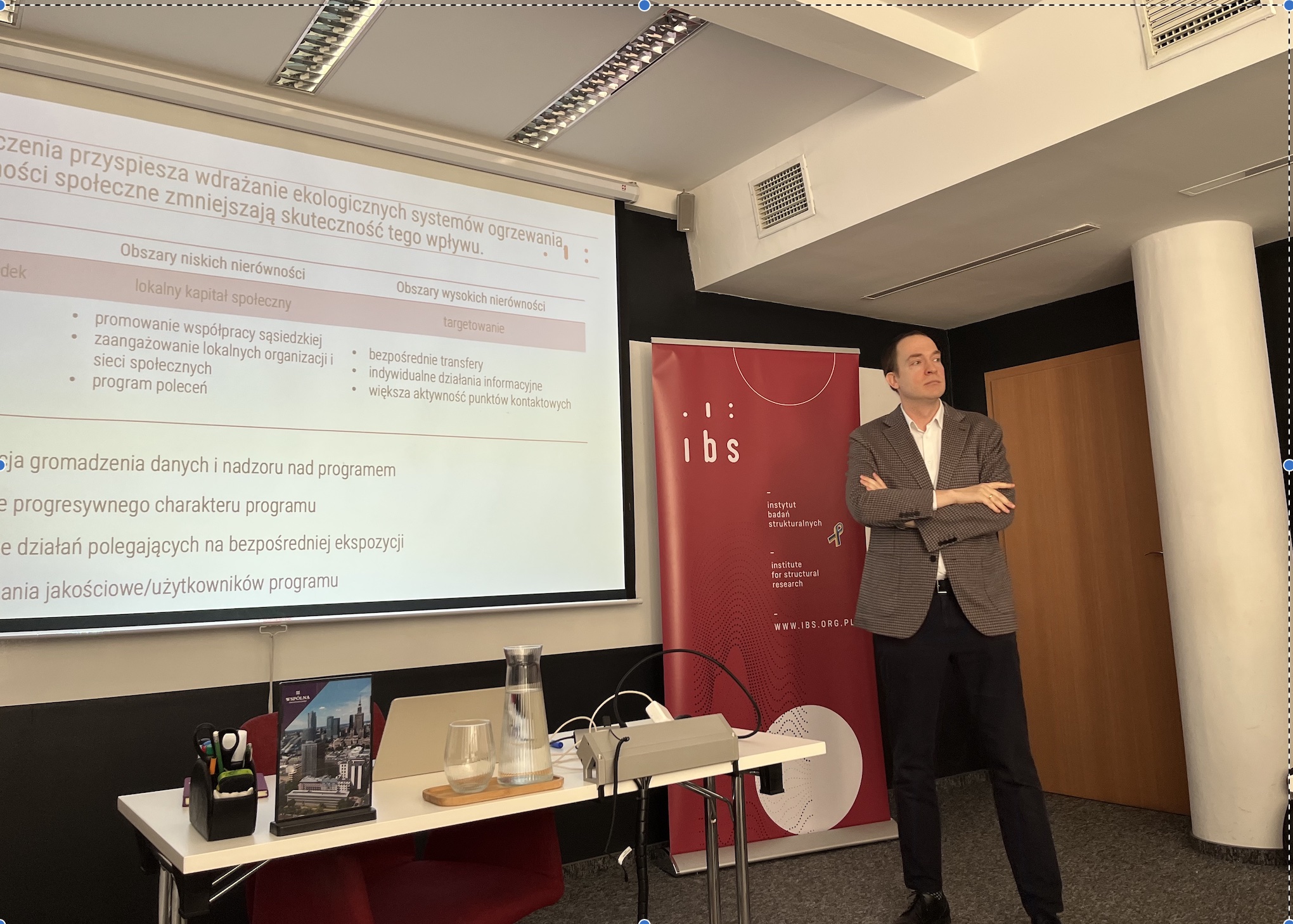
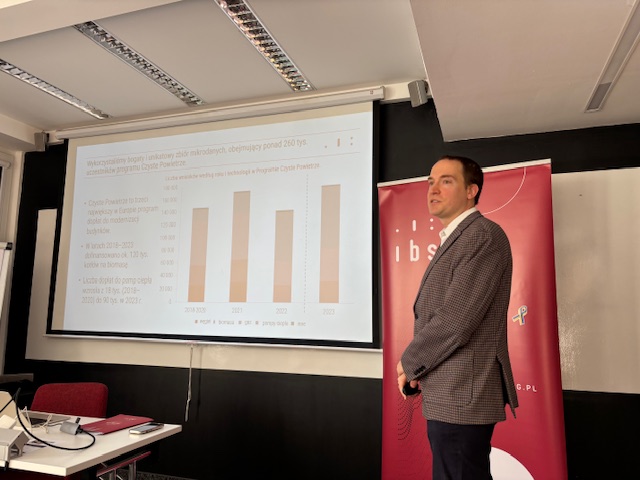

During the discussion, participants stressed the importance of local institutions in disseminating good practices and pointed to financial and informational barriers that hinder the implementation of the energy transition at regional and local levels. They also highlighted the need to better take vulnerable social groups into account in climate policies.
Areas requiring further research were also identified, including the perception of the material and non-material costs of the energy transition, non-financial motivations for investing in decarbonisation-friendly solutions, and the assessment of investment outcomes by beneficiaries of support programmes.