How Are Technological Changes Reshaping Labour Markets and Skill Needs? Highlights from the SkiLMeeT Final Conference
October 26 2026

The SkiLMeeT project, carried out by a consortium of eight research institutions, examined changing skill and qualification needs in the context of the digital and green transitions. Its research focused on the drivers of labour shortages, skills mismatches, and the potential role of labour market and education policies in addressing these challenges.
The two-day conference brought together researchers working on labour economics, education, and technological change. The programme featured more than 30 presentations covering topics such as artificial intelligence, automation, structural changes in employment, vocational education, and job quality.
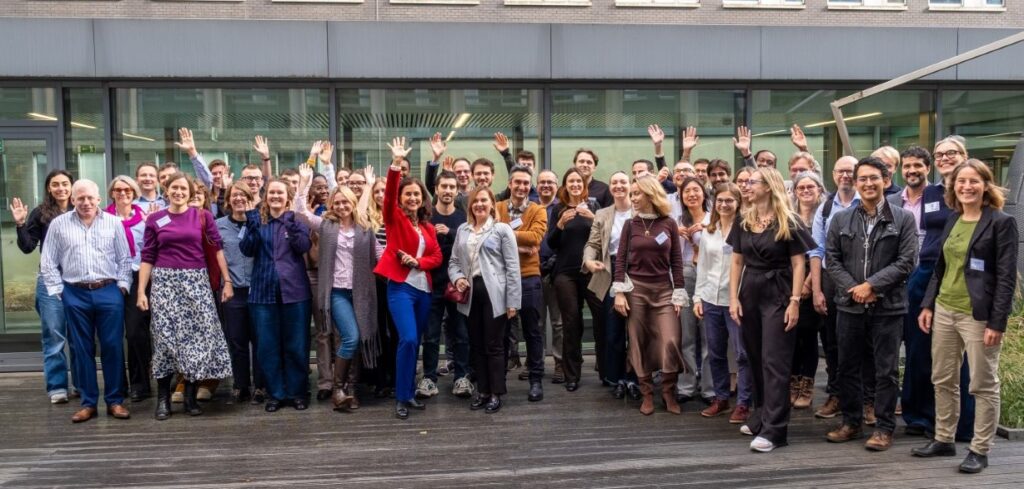
One of the central themes of the conference was the unequal impact of structural change on workers.
Professor Oskar Nordström Skans from Uppsala University presented research exploring why job loss has much more severe consequences for some workers than for others. Drawing on Swedish administrative data and machine learning methods, he demonstrated substantial differences in the long-term earnings losses experienced by workers following plant closures. Among the least affected workers, earnings losses amounted to approximately 5%, compared with 45–50% among the most vulnerable. Older workers, those with lower levels of education, and employees in smaller, less dynamic local labour markets were particularly disadvantaged.
In the second part of his lecture, Nordström Skans presented preliminary findings on the impact of artificial intelligence on the Swedish labour market. He emphasised that the effects of emerging technologies may not primarily fall on workers with lower qualifications. Early evidence suggests that firms and sectors highly exposed to AI are reducing recruitment into entry-level positions. Graduates from fields associated with high AI exposure also appear to be experiencing deteriorating labour market outcomes, although further research is needed to establish the scale and persistence of these trends.
Professor Ines Helm from Johannes Kepler University Linz focused on the consequences of declining manufacturing employment. Her research, based on German administrative data, showed that manufacturing job losses disproportionately affect lower-paid workers. Historically, manufacturing provided relatively well-paid jobs even for employees without advanced qualifications. As manufacturing employment declines, these workers are increasingly moving into lower-paid service-sector jobs, including logistics and hospitality, and are often unable to regain their previous earnings.
Between 1988 and 2007, the costs of job displacement increased substantially for lower-paid manufacturing workers, while remaining relatively stable for higher-paid employees. The findings suggest that structural economic change can contribute to wage inequality not only through the disappearance of particular occupations, but also through the loss of relatively well-paid jobs accessible to workers with lower qualifications.
Both keynote lectures highlighted the importance of policies supporting workers through technological and structural transitions. The benefits of productivity growth and technological progress are not distributed equally, and effective policy responses require a better understanding of which groups are most vulnerable to the negative consequences of economic transformation.
On the first day of the conference, Karol Madoń from IBS presented the study “Automation and Educational Choice: Evidence from Norway”, examining how automation influences young people’s educational decisions.
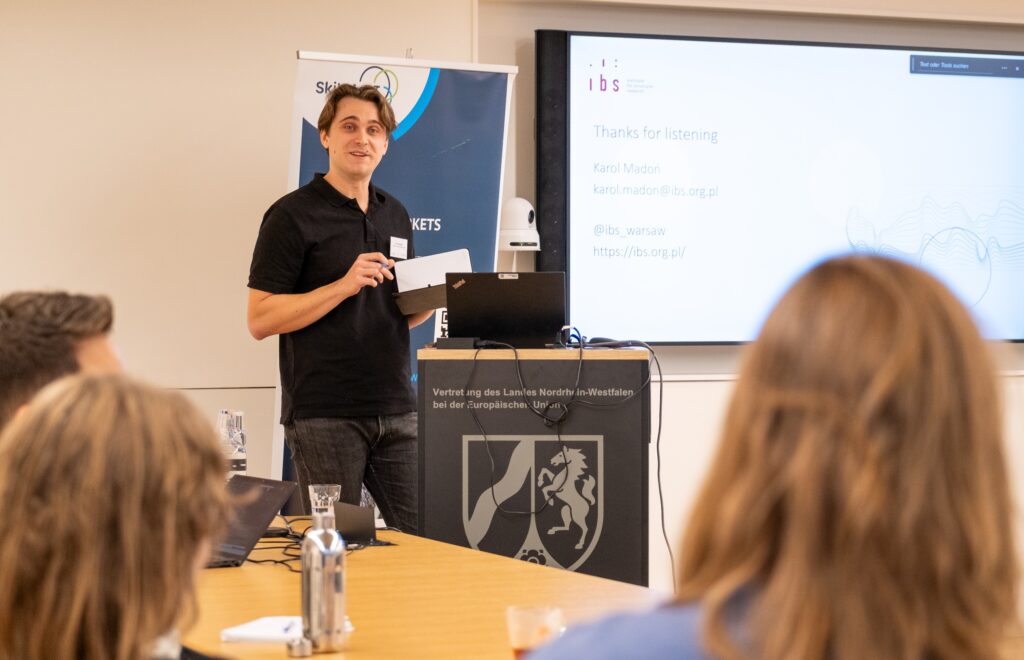
Most research on automation focuses on its consequences for employment and wages. This study instead asks whether young people adjust their educational choices in response to technological changes taking place in their local labour markets.
The analysis draws on Norwegian administrative data covering students making educational choices between 2006 and 2018, combined with information on industrial robot adoption across local labour markets.
The findings indicate that young people in regions more exposed to robotisation are less likely to pursue vocational education, particularly programmes preparing them for manufacturing occupations. This effect is especially pronounced among boys, who are more likely to choose educational pathways linked to industries directly affected by automation. Among male students, the study also identifies a shift away from manufacturing-related vocational programmes towards vocational education in service-sector occupations.
Automation also appears to influence decisions made after students have entered an educational pathway. Students from areas more exposed to robotisation are more likely to switch from vocational programmes to general education, which provides a route to higher education.
The study further highlights the importance of family background. Among girls whose mothers worked in sectors more exposed to robotisation, researchers observed a greater likelihood of moving away from vocational education.
These findings suggest that technological change may shape the future supply of skills even before young people enter the labour market. An important question for further research is whether such educational adjustments translate into better employment prospects and higher earnings later in life.
On the second day of the conference, Zuzanna Kowalik from IBS presented findings from a comparative study of nurses’ working conditions in Poland and Bulgaria, conducted jointly with Mina Kostova, Vassil Kirow and Aleksandra Prusak as part of the SkiLMeeT project.
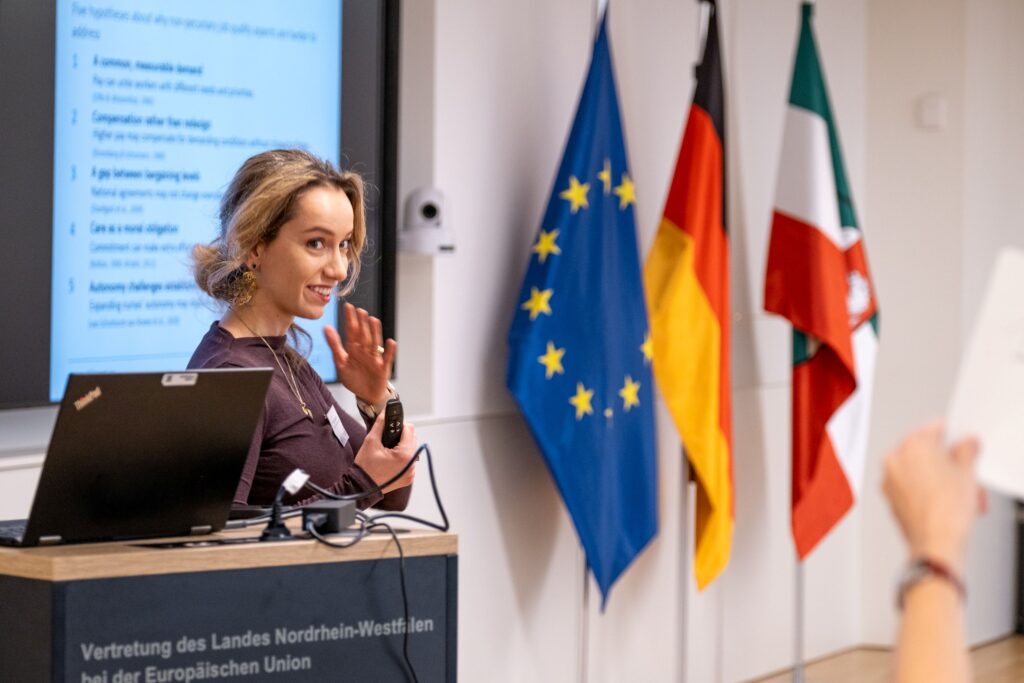
Nursing shortages represent one of the major challenges facing European healthcare systems. In 2023, 15 European countries reported shortages of nurses, while population ageing continues to increase demand for healthcare and care services.
Poland and Bulgaria are among the countries with relatively low numbers of nurses per capita, but they have adopted different approaches to improving nurses’ employment conditions. In Poland, following mobilisation by the nursing profession, legislation established minimum salary levels linked to formal qualifications. In Bulgaria, wage increases remain more dependent on fragmented collective bargaining arrangements and decisions made by individual employers.
Drawing on 28 interviews with nurses in both countries, the researchers examined how these institutional differences shape job quality.
The findings show that although nurses in Poland are now considerably more satisfied with their salaries, both countries continue to face similar challenges related to work organisation, excessive workloads, and limited professional autonomy.
In Poland, staff shortages contribute to work intensification during long, often 12-hour shifts, as well as the expansion of nurses’ administrative and organisational responsibilities. In Bulgaria, excessive workloads more frequently result from nurses combining jobs with multiple employers to secure sufficient income, leaving limited time for rest and family life.
In both countries, nurses also reported that their qualifications were not being fully utilised. Despite increasing levels of education and professional specialisation, their autonomy remains constrained by established hospital hierarchies and the subordination of nursing decisions to physicians.
The study identifies a potential vicious cycle: staff shortages increase workloads, worsen job quality, and make it more difficult to retain nurses, which may in turn further exacerbate shortages.
The findings suggest that salary increases, while important, are not sufficient on their own to address healthcare workforce shortages. Improvements in work organisation, reduced workloads, and greater recognition and utilisation of nurses’ professional skills and autonomy are also needed.
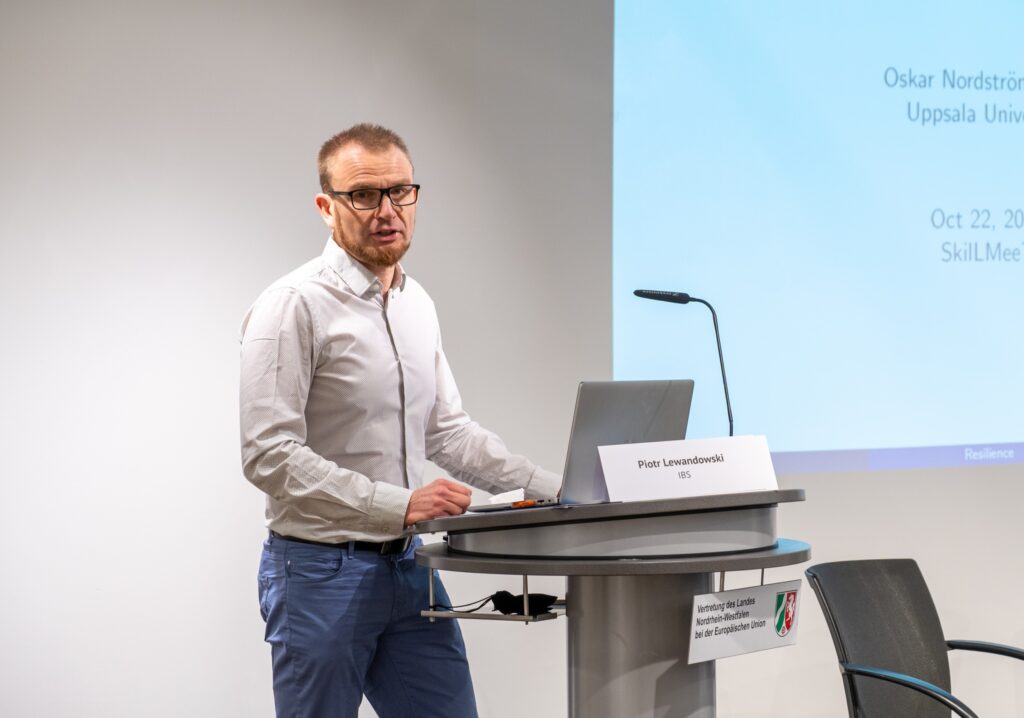
Piotr Lewandowski presented a study conducted with Karol Madoń and Albert Park (Asian Development Bank) that develops a worker-level measure that combines AI capabilities with internationally comparable surveys of job tasks, covering 108 countries representing nearly 90% of global employment. He showed that differences in occupational task content are as important as occupational structures in explaining international disparities in AI exposure.
The findings reveal that workers in less-developed countries are generally less exposed to AI, highlighting the uneven global distribution of potential technological opportunities and disruptions.
The SkiLMeeT conference demonstrated that adapting European labour markets to technological and demographic change requires looking beyond the number of workers holding particular qualifications.
Automation influences the educational decisions of future workers, structural economic change can deepen existing inequalities, and labour shortages do not necessarily result solely from an insufficient supply of qualified professionals. Equally important is whether employers make effective use of available skills and provide working conditions that encourage employees to remain in their occupations.


