Piotr Lewandowski at a meeting of UN experts on Industrial Development (UNIDO)
June 29 2026
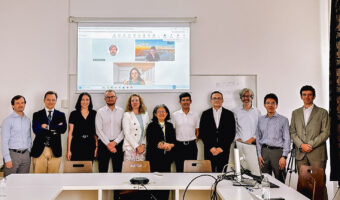
The event was organized by the United Nations Industrial Development Organization (UNIDO) in collaboration with the University of Dubrovnik. The meeting brought together leading experts to provide input for the next edition of the UNIDO Industrial Development Report, which will focus on the role of artificial intelligence in industrial development. Discussions addressed the diffusion of AI across Eastern Europe and Central Asia, its implications for productivity and structural transformation, and policy priorities for fostering the productive use of AI in the region.
During the meeting, Piotr Lewandowski presented the paper “Workers’ Exposure to AI in Europe and Central Asia”, which examines cross-country differences in workers’ exposure to artificial intelligence. The presentation showed that workers performing the same occupation often carry out different tasks depending on a country’s level of economic development, leading to substantial differences in AI exposure. The findings indicate that workers in Central and Eastern Europe and Central Asia are, on average, less exposed to AI than those in Western Europe, with differences primarily driven by ICT intensity, occupational structure, and firm characteristics.
The meeting brought together representatives of UNIDO, the European Commission’s Joint Research Centre (JRC), Eurostat, the European Bank for Reconstruction and Development (EBRD), the International Telecommunication Union (ITU), universities, and AI organizations from across the region. Participants included Nobuya Haraguchi, Alejandro Lavopa and Michele Delera (UNIDO), Daniel Nepelski (JRC, Jelena Reljic (Universita Sapienza Roma), Tomasz Snażyk (AI Chamber), and Nebojša Stojčić, Rector of the University of Dubrovnik. The expert discussions contributed to identifying research priorities and policy recommendations for strengthening AI adoption and industrial competitiveness in Eastern Europe and Central Asia.