LOCATEE project at the EPAH Conference 2026 in Athens
April 7 2026
EPAH is one of Europe’s key events dedicated to tackling energy poverty. During this year’s conference (17-18th March, Athens), João Pedro Gouveia (Nova School of Business and Economics) and Dimitris Papantonis (University of Piraeus Research Centre) took part in the session “Mapping and Measuring Energy Poverty Locally: From Data, Models, and Composite Indicators to Stakeholder-driven Solutions”.
Dimitris Papantonis shared insights from ongoing work within the LOCATEE project, highlighting how data-driven approaches and modelling tools can support cities in better identifying, monitoring, and addressing energy poverty. Also, the first draft of the EPMS concept was presented there in an interactive format, based on the Rumia example.
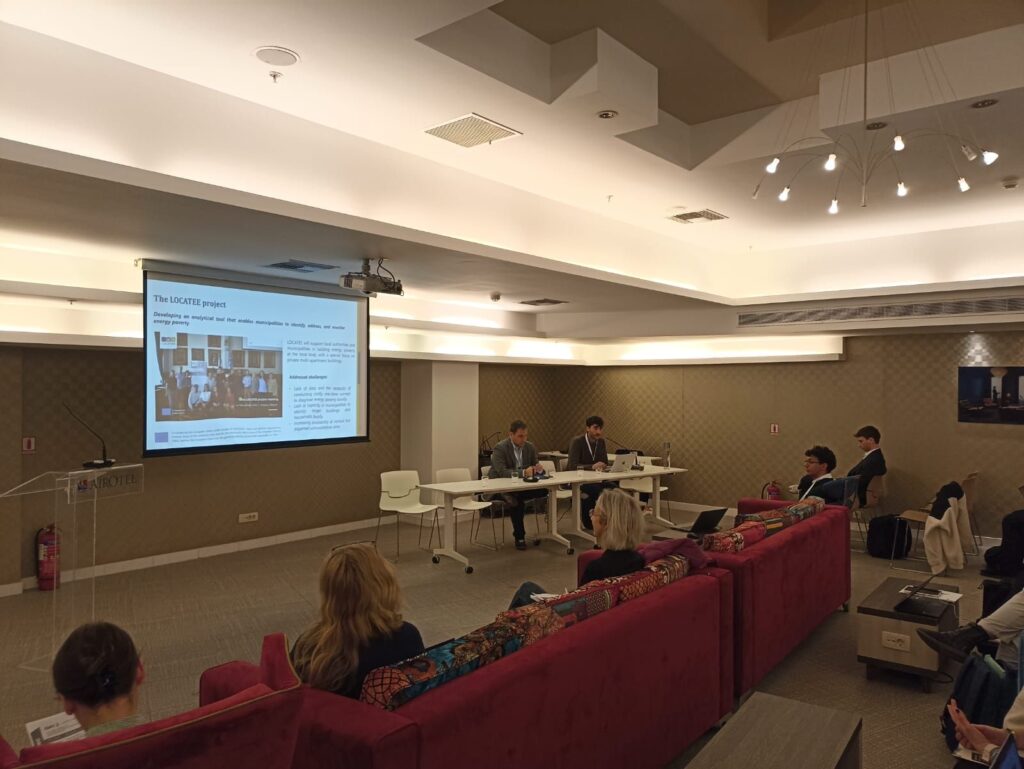
During the following panel presentation, moderated by João Pedro Gouveia, other panelists also took the floor: Sofia-Natalia Boemi (Institute for European Energy and Climate Policy), Emanuele Cocchi (Ricerca sul Sistema Energetico), and Alexandra Wegscheider-Pichler (Statistics Austria). The discussion reinforced a key message at the heart of LOCATEE: effective solutions require robust local data, tailored indicators, and close collaboration with stakeholders to ensure inclusive and impactful action.
The event was also an opportunity to make municipalities and other entities all across Europe familiar with the first LIFE project outputs and results.
The full agenda, as well as streams, is available on the EPAH website.